Foundation
Ayurveda Overview: The Complete Science of Life
Comprehensive exploration of Ayurvedic medicine from philosophical foundations to clinical practice. This guide integrates traditional wisdom from classical texts (Charaka Samhita, Sushruta Samhita, Ashtanga Hridaya) with modern scientific validation, covering the Pancha Mahabhutas, Tridosha theory, physiological systems, diagnostic methods, pharmacology, and therapeutic protocols.
Visual reference
Guides from the library
Key diagrams to anchor the Ayurvedic concepts covered across the app.
Pancha Mahabhutas: The Five Elements
Fundamental building blocks of creation according to Sankhya philosophy
Akasha (Ether/Space)
The first element representing space, expansiveness, and non-resistance
Sensory Quality
Sound (Shabda)
Properties
Body Manifestations
- •Hollow spaces in mouth, nostrils
- •Lungs and respiratory passages
- •Gastrointestinal tract
- •Abdominal cavities
Primary Functions
- •Medium for sound transmission
- •Allows differentiation of structures
- •Creates space for all other elements
Vayu (Air)
Principle of movement and kinetic energy, responsible for all propulsion
Sensory Quality
Touch (Sparsha)
Properties
Body Manifestations
- •Respiration and breathing
- •Blood circulation
- •Nerve impulse transmission
- •Movement of thoughts
- •Peristalsis and elimination
Primary Functions
- •All movement in body
- •Nerve signal transmission
- •Cellular communication
Agni (Fire)
Principle of transformation, metabolism, and conversion of matter to energy
Sensory Quality
Sight/Form (Rupa)
Properties
Body Manifestations
- •Digestive enzymes
- •Body temperature regulation
- •Intelligence and perception
- •Visual processing
- •Metabolic processes
Primary Functions
- •Converts food into tissue
- •Transforms experiences into memories
- •Regulates body temperature
Jala (Water)
Principle of liquidity, cohesion, and binding force
Sensory Quality
Taste (Rasa)
Properties
Body Manifestations
- •Blood plasma
- •Lymphatic fluid
- •Saliva and digestive juices
- •Mucosal secretions
- •Synovial fluid
Primary Functions
- •Nutrient transport medium
- •Binds cells together
- •Provides cohesion and moisture
Prithvi (Earth)
Principle of structure, solidity, and stability giving form to the body
Sensory Quality
Smell (Gandha)
Properties
Body Manifestations
- •Bones and skeletal system
- •Muscles and connective tissue
- •Tendons and cartilage
- •Hair, nails, and teeth
- •Solid tissues
Primary Functions
- •Provides structural framework
- •Gives form and shape
- •Grounds and stabilizes
Loka-Purusha Samanya
The principle that the macrocosm (Brahmanda) and microcosm (human body) are perfect reflections. The same laws governing planetary movements also govern biological processes like respiration, circulation, and metabolism.
Panchamahabhautic Composition
Everything in the universe—food, medicines, body tissues—is composed of these five elements in varying proportions. The difference between living and non-living matter is the presence of the Soul (Atman) that animates the elements.
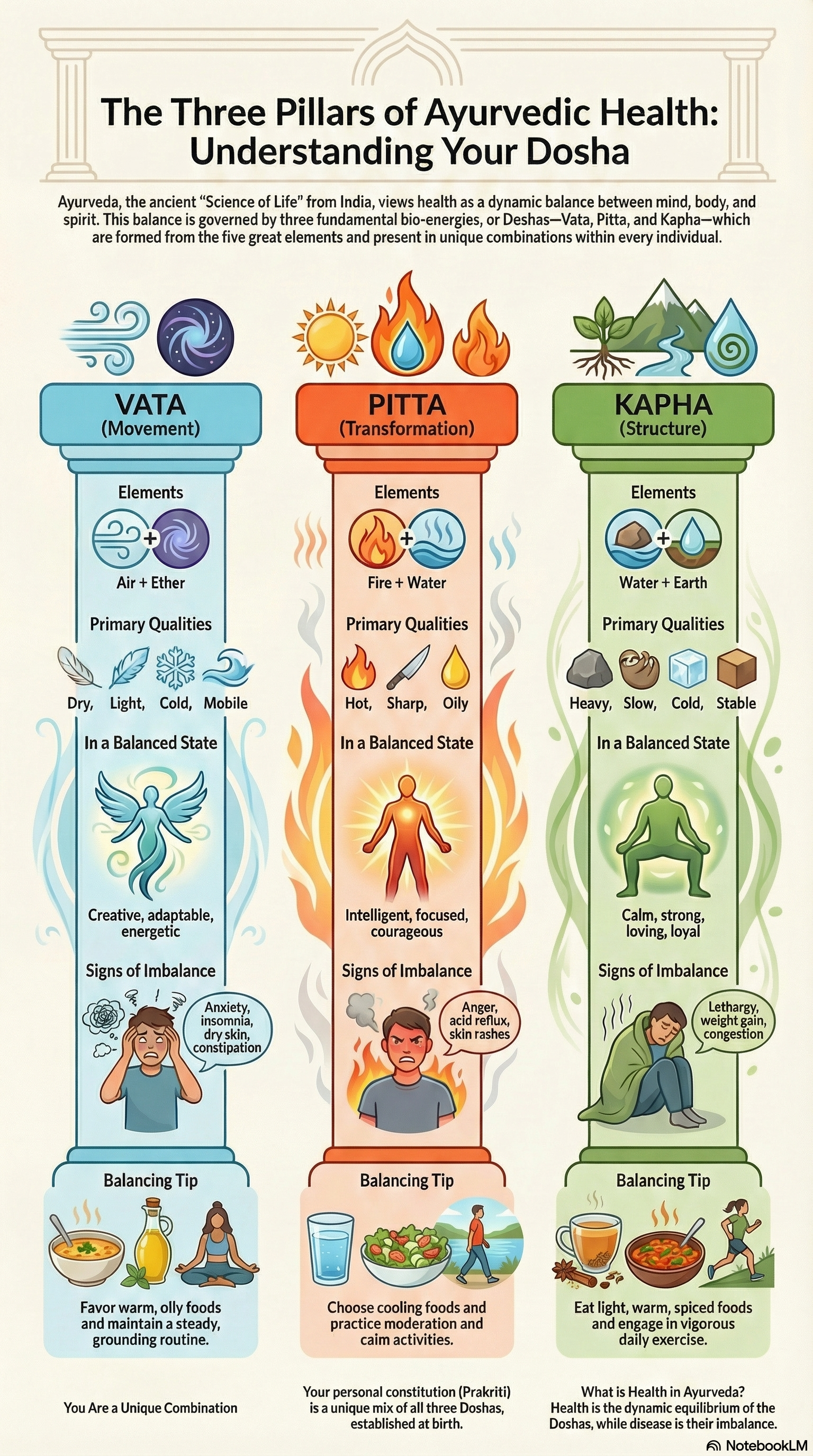
Tridosha Theory
The Three Biological Humors & Their Subdoshas
Prakriti (birth constitution) vs Vikriti (current imbalance). Each dosha has 5 functional subdivisions.
Vata
Locations: Colon, ears, bones, thighs
Light, Dry, Mobile, Cold
Creativity, Agility, Quick thinking
Anxiety, Insomnia, Bloating, Dryness
Pitta
Locations: Small intestine, blood, eyes, skin
Hot, Sharp, Oily, Spreading
Digestion, Vision, Leadership
Irritability, Acid reflux, Skin rashes
Kapha
Locations: Lungs, stomach, joints, lymph
Heavy, Slow, Stable, Cool
Immunity, Strength, Emotional steadiness
Lethargy, Congestion, Water retention
Clinical Importance of Subdoshas
Understanding subdoshas allows for precise diagnosis and targeted treatment. For example, migraine headaches may involve Prana Vayu (if stress-related), Udana Vayu (if neck tension), or Alochaka Pitta (if light-sensitive). Treatment protocols vary based on which subdosha is primarily vitiated, demonstrating the sophistication of Ayurvedic diagnostic methodology.
Prakriti Assessment: Know Your Constitution
Determine your unique mind-body constitution (birth nature)
Understanding Prakriti
Prakriti is your inherent constitution determined at conception by the doshic dominance at the moment of fertilization. It remains constant throughout life and represents your optimal state of health.
Instructions: Select the characteristic that best describes you throughout most of your life, not your current state. Be honest and consider your natural tendencies.
Physical Characteristics
Body Frame
Skin Type
Hair Quality
Eyes
Appetite
Digestion
Sleep Pattern
Physical Activity
Mental & Emotional Characteristics
Mental Activity
Memory
Emotional Tendency
Speech Pattern
Decision Making
Spending Habits
Agni & Ama
Digestive fire states
Balanced digestive fire; steady energy and clear mind.
Irregular fire; bloating and variable appetite.
Sharp fire; strong hunger, tendency to acidity.
Weak fire; heaviness and sluggish digestion.
Ama (toxins) forms when Agni is weak or erratic; clear channels (srotas) with gentle spices, warm water, and consistent meal timing.
Dhatu nourishment
Rasa → Ojas flow
Shad Rasa
Six tastes and dosha effects
Sweet
KaphaGrounds Vata & Pitta, increases Kapha
Sour
KaphaStimulates appetite, increases Pitta & Kapha
Salty
KaphaWarming, increases Pitta & Kapha
Pungent
KaphaWarms, reduces Kapha, can elevate Pitta
Bitter
KaphaCooling, reduces Pitta & Kapha
Astringent
KaphaDrying, grounds Pitta, reduces Kapha
Disease stages
Six stages (Shat Kriya Kala)
Intervene early to prevent progression; stages 1-3 most reversible.
Intervene early to prevent progression; stages 1-3 most reversible.
Intervene early to prevent progression; stages 1-3 most reversible.
Intervene early to prevent progression; stages 1-3 most reversible.
Intervene early to prevent progression; stages 1-3 most reversible.
Intervene early to prevent progression; stages 1-3 most reversible.
Ashtavidha Pariksha: Eight-Fold Examination
Classical Ayurvedic diagnostic methods for comprehensive patient assessment
Nadi Pariksha (Pulse Examination)
नाडी परीक्षा
Assessment of pulse at the radial artery using three fingers representing Vata, Pitta, and Kapha
Examination Method
Examined in the morning on an empty stomach, using the index, middle, and ring fingers of the physician's right hand on the patient's right wrist (left wrist for females)
Key Findings
- Vata pulse: Moves like a serpent (Sarpa-gati), irregular, thin, fast, disappearing
- Pitta pulse: Moves like a frog (Manduka-gati), strong, bounding, hot
- Kapha pulse: Moves like a swan (Hamsa-gati), slow, steady, cool, wave-like
- Depth, force, temperature, rhythm reveal disease prognosis
Clinical Significance
Over 100 distinct pulse qualities can be identified by experienced practitioners to determine dosha imbalance, disease location, and prognosis
Mutra Pariksha (Urine Examination)
मूत्र परीक्षा
Comprehensive urine analysis including color, odor, volume, frequency, and oil-drop test (Taila-bindu pariksha)
Examination Method
Mid-stream morning urine sample examined for physical characteristics; oil drop test performed by placing a drop of sesame oil in urine sample
Key Findings
- Color variations: Clear (Vata), yellow/red (Pitta), turbid/white (Kapha)
- Taila-bindu: Oil spreads quickly (Vata), oil shows rainbow colors (Pitta), oil sinks (Kapha)
- Pattern of oil spread predicts disease prognosis and curability
- Frequency, volume, odor indicate metabolic status
Clinical Significance
The oil-drop test (unique to Ayurveda) correlates with specific organ dysfunction and disease severity; spreading patterns predict treatment outcomes
Mala Pariksha (Stool Examination)
मल परीक्षा
Examination of fecal matter for consistency, color, odor, frequency, and associated symptoms
Examination Method
Visual inspection and questioning about bowel habits, formation, sinking/floating properties
Key Findings
- Vata: Dry, hard, scanty, dark, floats, passed with difficulty
- Pitta: Loose, yellow, burning, frequent, foul odor
- Kapha: Heavy, pale, mucoid, sinks, sticky
- Presence of Ama: Sticky, foul-smelling, sinks in water
Clinical Significance
Daily bowel movement assessment is crucial as it directly reflects Agni status and toxin accumulation; irregular patterns indicate Vata disorders
Jihva Pariksha (Tongue Examination)
जिह्वा परीक्षा
Detailed observation of tongue's color, coating, size, shape, moisture, and regional correlations to organs
Examination Method
Patient extends tongue in natural light; coating, color, cracks, and topography examined
Key Findings
- Coating color: White (Kapha/Ama), yellow/green (Pitta/toxins), brown/black (chronic Vata)
- Tongue map: Tip (heart/lungs), middle (digestive organs), back (kidneys/colon)
- Cracks indicate chronic Vata; teeth marks show Kapha or Spleen deficiency
- Dry tongue: dehydration/Vata; excessive saliva: Kapha
Clinical Significance
Tongue is considered the mirror of digestive system; coating thickness directly correlates with Ama (toxin) accumulation level
Shabda Pariksha (Voice/Sound Examination)
शब्द परीक्षा
Assessment of voice quality, speech patterns, breathing sounds, and internal body sounds
Examination Method
Listening to patient's voice, speech clarity, respiratory sounds, and questioning about voice changes
Key Findings
- Vata: Hoarse, dry, cracking, rapid speech
- Pitta: Sharp, loud, penetrating, argumentative
- Kapha: Deep, slow, monotonous, melodious
- Abnormal sounds: Wheezing (Vata in Pranaha Srotas), gurgling (Kapha congestion)
Clinical Significance
Voice changes can indicate respiratory disorders, thyroid imbalances, and nervous system function; early sign of disease manifestation
Sparsha Pariksha (Touch Examination)
स्पर्श परीक्षा
Tactile examination of skin temperature, moisture, texture, and palpation of organs/pulses
Examination Method
Physician uses hands to feel skin quality, temperature variations, swellings, hardness, and tenderness
Key Findings
- Vata skin: Cold, dry, rough, thin
- Pitta skin: Hot, moist, soft, warm to touch
- Kapha skin: Cool, oily, thick, smooth
- Palpation reveals organ enlargement, masses, tenderness
Clinical Significance
Temperature variations indicate metabolic activity; skin texture reveals tissue nourishment status; palpation detects structural abnormalities
Drik Pariksha (Eye Examination)
दृक् परीक्षा
Comprehensive eye examination including sclera, conjunctiva, iris, pupil, luster, and eye movements
Examination Method
Visual inspection in good light, observing color, clarity, discharge, and patient's visual capabilities
Key Findings
- Vata eyes: Dry, dull, small, trembling, dark circles
- Pitta eyes: Red, inflamed, light-sensitive, yellowish sclera
- Kapha eyes: White, heavy lids, excessive tearing, sticky discharge
- Sclera color: Yellow (liver/Pitta), red (inflammation), pale (anemia)
Clinical Significance
Eyes reflect liver health (sclera color), blood quality, and general vitality (luster); pupil reactions indicate nervous system status
Akriti Pariksha (Physical Appearance)
आकृति परीक्षा
Overall body structure, build, posture, gait, and general appearance assessment
Examination Method
Observation of patient's body frame, proportions, posture, movements, and overall presentation
Key Findings
- Vata build: Thin, tall or very short, prominent joints, irregular features
- Pitta build: Medium, well-proportioned, muscular, symmetrical
- Kapha build: Heavy, large frame, rounded features, steady movements
- Posture and gait reveal Vata (irregular), Pitta (purposeful), Kapha (slow/steady)
Clinical Significance
Body structure indicates Prakriti (constitution); sudden changes in build suggest disease progression or metabolic disorders
Nadi Pariksha: Detailed Pulse Qualities by Dosha
| Quality | Vata Pulse | Pitta Pulse | Kapha Pulse |
|---|---|---|---|
| Frequency | 80-100/min | 70-80/min | 60-70/min |
| Force | Weak, thready | Strong, bounding | Slow, steady |
| Temperature | Cold | Warm/Hot | Cool |
| Character | Serpent (irregular) | Frog (jumping) | Swan (gliding) |
| Depth | Superficial | Moderate | Deep |
Trividha Pariksha (Three-Fold Examination)
Additional complementary diagnostic approach:
- Darshana: Visual observation (inspection)
- Sparshana: Tactile examination (palpation)
- Prashna: Interrogation (detailed history)
Dashavidha Pariksha (Ten-Fold Examination)
Extended diagnostic assessment includes:
- The 8 examinations above, plus:
- Strength assessment (Bala Pariksha)
- Constitutional analysis (Prakriti Pariksha)
⚕️ Medical Disclaimer
The diagnostic methods described here are for educational purposes only. These techniques require years of training and should only be performed by qualified Ayurvedic practitioners. Always consult licensed healthcare professionals for medical diagnosis and treatment.
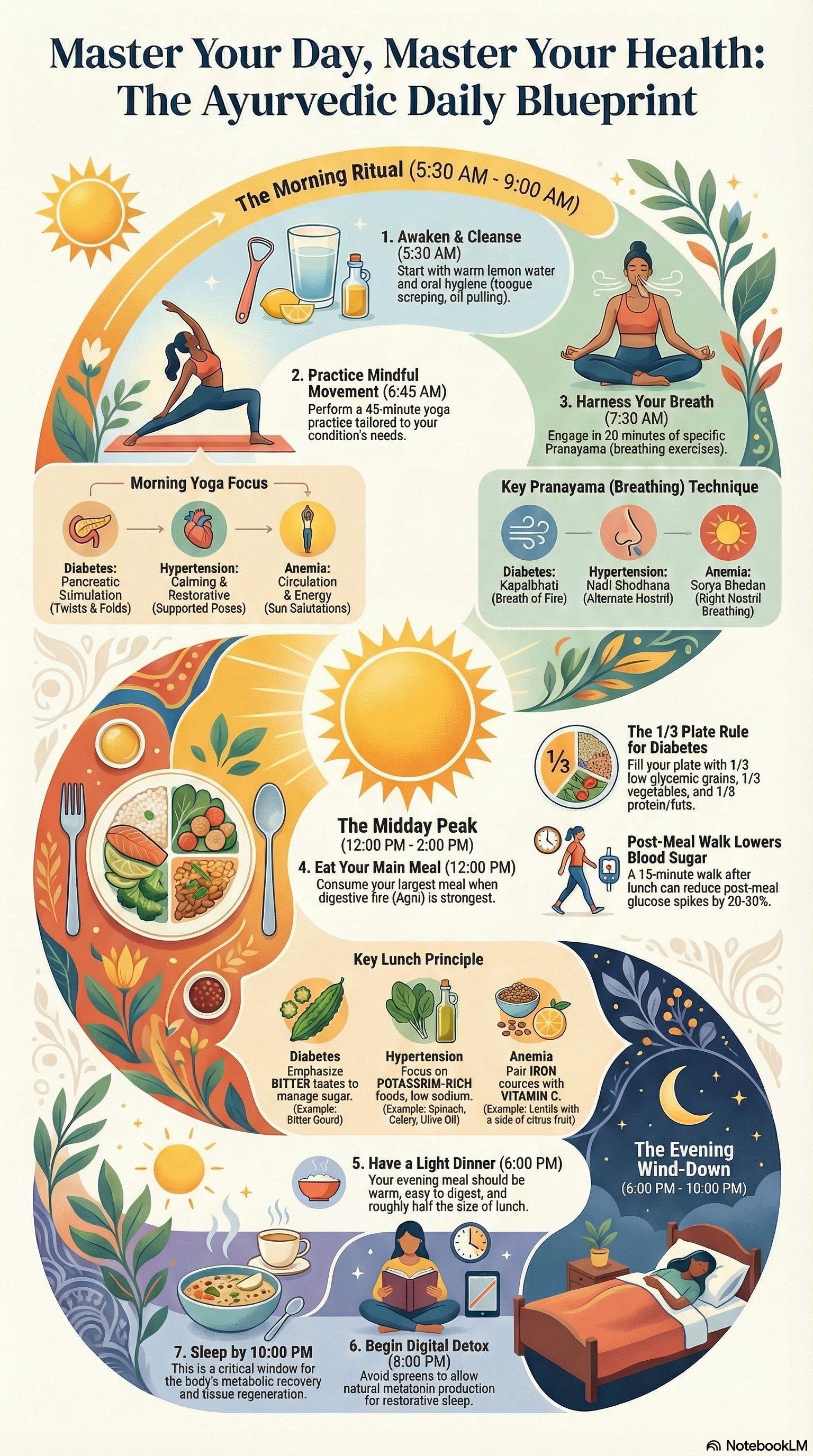
Circadian Rhythm (Dinacharya)
Align daily activities with natural dosha cycles for optimal health
Brahma Muhurta
Ideal time for meditation, spiritual practices, and waking. Air element dominant.
Morning Energy
Heavy, sluggish quality. Light breakfast and active movement recommended.
Peak Agni
Strongest digestive fire. Best time for main meal and mental work.
Afternoon Creativity
Air element returns. Good for creative work and light activities.
Evening Wind-Down
Heavy quality returns. Light dinner and relaxation prepare for sleep.
Deep Sleep & Repair
Body's natural detoxification and repair. Essential to be asleep during this time.
Key Principle
The body's doshas cycle every 4 hours throughout the day. Aligning activities with these natural rhythms optimizes digestion, energy levels, and overall health. The most critical practices are: eating the main meal during Pitta time (10 AM - 2 PM) and sleeping during the first Pitta cycle (10 PM - 2 AM) for optimal detoxification.
Seasonal Rhythms (Ritucharya)
Adapt diet and lifestyle to maintain balance through the changing seasons
Spring (Vasant)
Characteristics
- •Kapha accumulated in winter melts and aggravates
- •Increased moisture and heaviness
- •Sluggish digestion, allergies, congestion common
Dietary Focus
- •Light, dry, warm foods
- •Bitter, pungent, astringent tastes
- •Reduce heavy, oily, sweet foods
- •Barley, honey, ginger, leafy greens
Lifestyle Tips
- •Vigorous exercise to reduce Kapha
- •Dry massage (powder massage)
- •Wake early, avoid daytime sleep
- •Therapeutic cleansing (detox)
Summer (Grishma)
Characteristics
- •Heat accumulates, strength decreases
- •Pitta begins to build up
- •Dehydration risk, decreased appetite
Dietary Focus
- •Cool, liquid, sweet foods
- •Sweet, bitter, astringent tastes
- •Avoid hot, spicy, sour, salty
- •Milk, ghee, rice, cucumber, melons, coconut water
Lifestyle Tips
- •Avoid excessive sun exposure
- •Light exercise during cool hours
- •Oil massage, cool baths
- •Wear light, breathable clothing
- •Stay hydrated with cooling drinks
Autumn (Sharad)
Characteristics
- •Accumulated Pitta aggravates with seasonal change
- •Transition period as Vata begins to increase
- •Digestive sensitivity common
Dietary Focus
- •Sweet, bitter, astringent tastes
- •Cooling, light foods
- •Avoid sour, salty, pungent
- •Rice, milk, ghee, bitter vegetables
Lifestyle Tips
- •Moderate exercise
- •Regular routine important
- •Oil massage for Vata prevention
- •Avoid excessive heat exposure
Winter (Hemant & Shishir)
CurrentCharacteristics
- •Cold, dry qualities increase Vata
- •Stronger Agni but external cold
- •Joint stiffness, dryness common
Dietary Focus
- •Warm, nourishing, oily foods
- •Sweet, sour, salty tastes
- •Avoid cold, dry, light foods
- •Soups, stews, root vegetables, ghee, nuts, warming spices
Lifestyle Tips
- •Oil massage (warm sesame oil)
- •Keep warm, avoid cold exposure
- •Moderate to vigorous exercise
- •Stay active but don't overexert
- •Regular sleep schedule
Seasonal Transitions (Ritu Sandhi)
The 2-week periods between seasons are particularly important for health. During these transitions, gradually shift from one season's regimen to the next to allow the body to adapt. Panchakarma detoxification is traditionally recommended during these transition periods for optimal health.
Viruddha Ahara: Incompatible Food Combinations
Ayurvedic principles of food combining to prevent toxin formation
Understanding Viruddha Ahara
Viruddha Ahara refers to food combinations that are antagonistic to the body's tissues (Dhatus) and digestive capacity (Agni). When consumed regularly, they create Ama (toxins), disturb Dosha balance, and are the root cause of many modern chronic diseases including allergies, autoimmune conditions, and metabolic disorders.
Dairy Combinations
Milk + Fish
Virya (potency) mismatch: Cooling milk vs. Heating fish
Blood toxicity (Rakta Dushti), skin disorders, vitiligo, psoriasis
Milk is Sheeta Virya (cooling); Fish is Ushna Virya (heating). Opposing potencies disturb Rasa and Rakta Dhatus.
Milk + Sour Fruits
Creates fermentation and curdles milk in the stomach
Digestive disturbances, toxin formation, allergies
Amla Rasa (sour taste) aggravates Pitta and curdles Kapha-dominant milk.
Milk + Salt
Opposing qualities create internal conflict
Skin diseases, blood disorders
Lavana (salt) is heating; milk is cooling. Creates Viruddha Ahara.
Milk + Bananas
Both are heavy (Guru) and mucus-forming (Kapha-increasing)
Congestion, heaviness, Ama formation, sinus issues
Guruta Viruddha - excessive heaviness overwhelms Agni.
Yogurt + Milk
Different stages of digestion; yogurt is heating, milk is cooling
Digestive confusion, toxin buildup
Paka Viruddha - digestive incompatibility between fermented and fresh dairy.
Nightshades + Dairy
Interferes with enzymatic digestion of dairy proteins
Inflammatory conditions, joint pain
Samskara Viruddha - incompatible processing creates subtle toxins.
Honey Combinations
Honey + Ghee (Equal Quantities)
Equal proportions by weight create a toxic compound
Formation of Ama, cardiovascular toxicity, neurological harm
Samyoga Viruddha - specific quantity ratio incompatibility mentioned in Charaka Samhita.
Heated Honey
Heating honey above 40°C (104°F) denatures it into a glue-like toxin
Obstructs Srotas (channels), creates Ama, impairs digestion
Samskara Viruddha - heating transforms honey's molecular structure into indigestible residue.
Honey + Hot Liquids
Adding honey to boiling tea or water heats it beyond safe temperature
Channel obstruction, toxin accumulation
Ushna Viruddha - heat-incompatibility. Honey should be added only when liquid is lukewarm.
Fruit Combinations
Fruits + Meals
Fruits digest quickly; mixed with slow-digesting foods causes fermentation
Gas, bloating, toxin formation
Kala Viruddha - timing incompatibility. Fruits should be eaten alone, 30 min before or 2 hours after meals.
Melons + Any Other Food
Melons digest extremely fast and should always be eaten alone
Fermentation, digestive distress
Krama Viruddha - melons are Sheeta, Snigdha, Guru and incompatible with all other food groups.
Citrus + Milk
Acid in citrus curdles milk
Digestive heaviness, toxins
Virya Viruddha - potency mismatch between Amla (sour/heating) and milk (sweet/cooling).
Protein Combinations
Egg + Fish
Both are high-protein Tamasic foods with conflicting heating properties
Excessive heat in blood, skin eruptions
Dravya Viruddha - substance incompatibility between two animal proteins.
Egg + Milk
Different protein structures requiring different digestive enzymes
Incomplete digestion, Ama formation
Paka Viruddha - digestive incompatibility.
Beans + Cheese
Both are heavy and difficult to digest; combination overwhelms Agni
Extreme heaviness, gas, lethargy
Guruta Viruddha - excessive heaviness creates Manda Agni.
Seasonal & Timing Incompatibilities
Yogurt at Night
Kapha time of day; yogurt increases Kapha and mucus
Congestion, sinus issues, morning stiffness
Kala Viruddha - time incompatibility. Yogurt should be consumed before sunset.
Ice Cream in Winter
Cooling food in cold season aggravates Kapha and Vata
Respiratory disorders, weak digestion
Ritu Viruddha - seasonal incompatibility.
Hot Spicy Foods in Summer
Heating foods in hot season aggravate Pitta
Acidity, inflammation, skin rashes
Ritu Viruddha - seasonal mismatch increases Pitta Dosha.
Preparation & Processing Incompatibilities
Reheated Food (Multiple Times)
Prana (life force) is depleted; molecular structure degrades
Tamasic (dull) quality, poor nutrition, Ama formation
Samskara Viruddha - processing incompatibility destroys subtle nutrients.
Microwaved Food
Uneven heating destroys Prana and alters molecular structure
Loss of vitality, poor nourishment
Modern Samskara Viruddha - electromagnetic processing affects food energetics.
Radishes + Milk
Pungent, heating vegetable conflicts with sweet, cooling milk
Skin disorders, digestive upset
Virya Viruddha - opposite potencies create internal conflict.
18 Types of Viruddha Ahara (Classical Classification)
General Principles of Food Combining
- →Do not combine foods with opposing Virya (heating vs. cooling potencies)
- →Avoid mixing foods with vastly different digestion times
- →Do not eat heavy, incompatible meals when Agni is weak (sick, elderly, children)
- →Respect seasonal guidelines (Ritucharya) - eat cooling foods in summer, heating in winter
- →Time matters: Yogurt/heavy foods should be consumed during the day, not at night (Kapha time)
- →Raw and cooked foods should not be mixed in the same meal
- →Equal quantities of opposite qualities (e.g., honey + ghee) are specifically toxic
Exceptions & Antidotes
Ayurveda recognizes that some incompatible combinations can be neutralized:
- • Ghee acts as an antidote to many incompatibilities
- • Strong Agni can digest mild incompatibilities
- • Habituation (Satmya): Long-term consumption builds tolerance
- • Youth has stronger Agni, reducing incompatibility effects
Modern Research Validation
Scientific studies confirm many Ayurvedic food incompatibility principles. For example, milk + fish creates histamine compounds that trigger allergic responses. Heated honey forms hydroxymethylfurfural (HMF), a toxic compound. The principles of Viruddha Ahara align with modern understanding of food chemistry and enzymatic digestion.
Panchakarma: The Five Purification Therapies
Rigorous clinical detoxification process to remove toxins at the cellular level
Medical Warning
Panchakarma is NOT a spa treatment. It is a rigorous medical procedure that must be performed under the supervision of a qualified Ayurvedic physician (Vaidya) with proper diagnosis, constitution assessment, and individualized protocol design. Self-administration can cause serious harm.
Purva Karma (Preparation Phase)
Preparatory procedures to loosen toxins from tissues and move them to the GI tract
Dipana & Pachana
Kindle digestive fire and burn immediate toxins
Snehana (Oleation)
Lubricate channels and loosen Ama from tissues
- •Internal: Snehapana (medicated ghee consumption in increasing doses)
- •External: Abhyanga (full body oil massage with warm medicated oils)
Swedana (Sudation)
Liquefy toxins and dilate channels through steam therapy
- •Bashpa Sweda (steam cabinet)
- •Pinda Sweda (herbal bolus massage)
- •Nadi Sweda (localized steam)
Benefits of Panchakarma
- ✓Deep cellular detoxification beyond superficial cleansing
- ✓Reset of Agni (digestive fire) and metabolic efficiency
- ✓Removal of Ama (toxins) from Srotas (channels)
- ✓Restoration of Dhatu (tissue) quality and Ojas (immunity)
- ✓Enhanced longevity and prevention of chronic diseases
- ✓Mental clarity and emotional balance
General Contraindications
- ✗Pregnancy and lactation
- ✗Active menstruation (delay procedures)
- ✗Severe debility or cachexia
- ✗Active infections or fever
- ✗Cardiovascular emergencies
- ✗Recent surgery (wait 6 months)
Historical Context
Panchakarma has been practiced for over 3,000 years and is described in detail in the classical texts Charaka Samhita and Sushruta Samhita. Ancient kings underwent Panchakarma annually to maintain vitality and longevity. Modern research validates its effectiveness in removing lipophilic toxins, heavy metals, and reducing inflammatory markers.
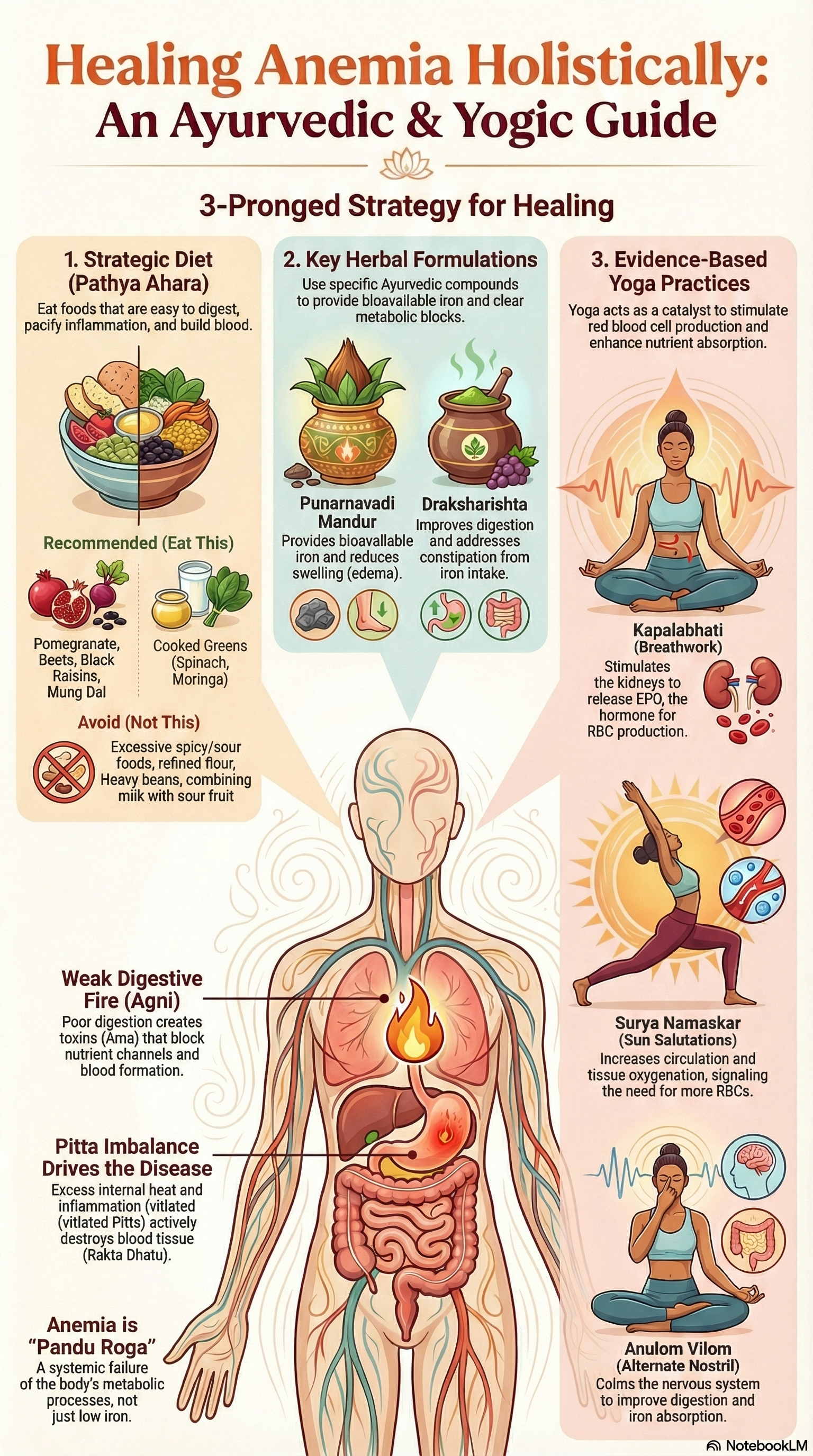
Educational use only. Not medical advice. Consult a qualified clinician before changing diet, herbs, medications, or yoga/pranayama intensity—especially for diabetes, hypertension, or anemia. Contraindications vary by individual.